As an Amazon Associate, Gadgets Finds earns from qualifying purchases.
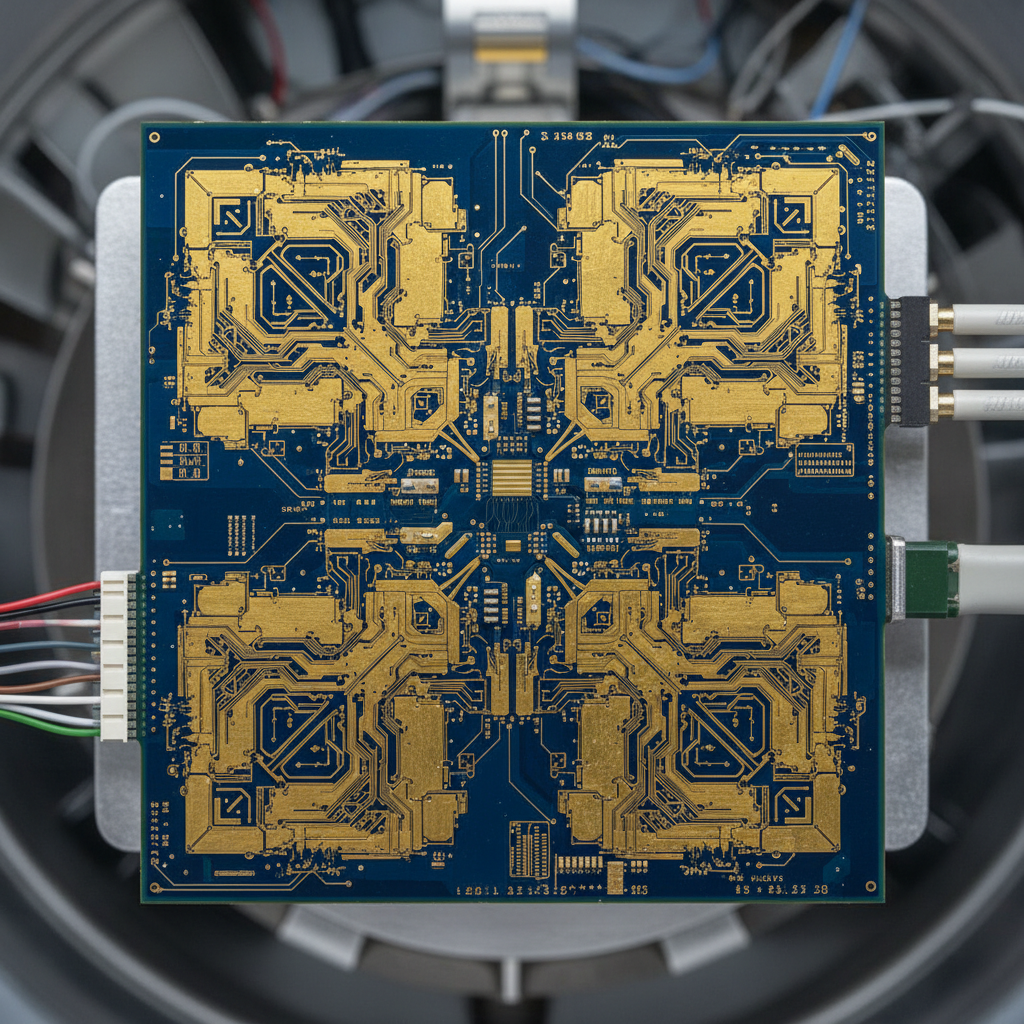
IBM reaches major milestone in quantum computing with commercial-grade processor, opening new possibilities for drug discovery and cryptography.
IBM's achievement of a 1000-qubit quantum processor marks a pivotal moment in computing history, bringing practical quantum applications within reach for enterprises and research institutions.
Named "Condor," IBM's 1000-qubit processor represents the culmination of decades of quantum computing research. The processor features 1,121 superconducting qubits arranged in a hexagonal lattice pattern, optimized for error correction and quantum entanglement.
Key technical achievements include:
IBM's Condor processor achieves a quantum volume of 2^20 (over 1 million), representing the largest quantum volume demonstrated to date. This metric considers not just qubit count but also error rates, connectivity, and gate performance.
In practical terms, the processor can:
IBM is making the Condor processor available through IBM Quantum Network, with several early adopters already running production workloads:
The Condor processor implements IBM's surface code error correction, using approximately 100 physical qubits to create one logical qubit with dramatically reduced error rates. This overhead is necessary for reliable quantum computation but represents a significant engineering achievement.
IBM's roadmap includes reducing this overhead to 10:1 by 2028, enabling 100 logical qubits from a 1000-qubit processor—sufficient for many practical applications.
IBM provides comprehensive tools for quantum development:
Access to the Condor processor is available through several tiers:
IBM's quantum roadmap extends beyond the Condor processor:
The availability of a 1000-qubit commercial quantum processor accelerates the timeline for practical quantum computing by an estimated 5 years. Industries from pharmaceuticals to finance are now investing heavily in quantum computing expertise, recognizing that quantum advantage is no longer a distant possibility but an emerging reality.
Despite this milestone, significant challenges remain. Quantum algorithms for many problems are still being developed, and the quantum computing workforce is limited. IBM is addressing these challenges through educational initiatives, partnerships with universities, and continued investment in quantum research.
