As an Amazon Associate, Gadgets Finds earns from qualifying purchases.
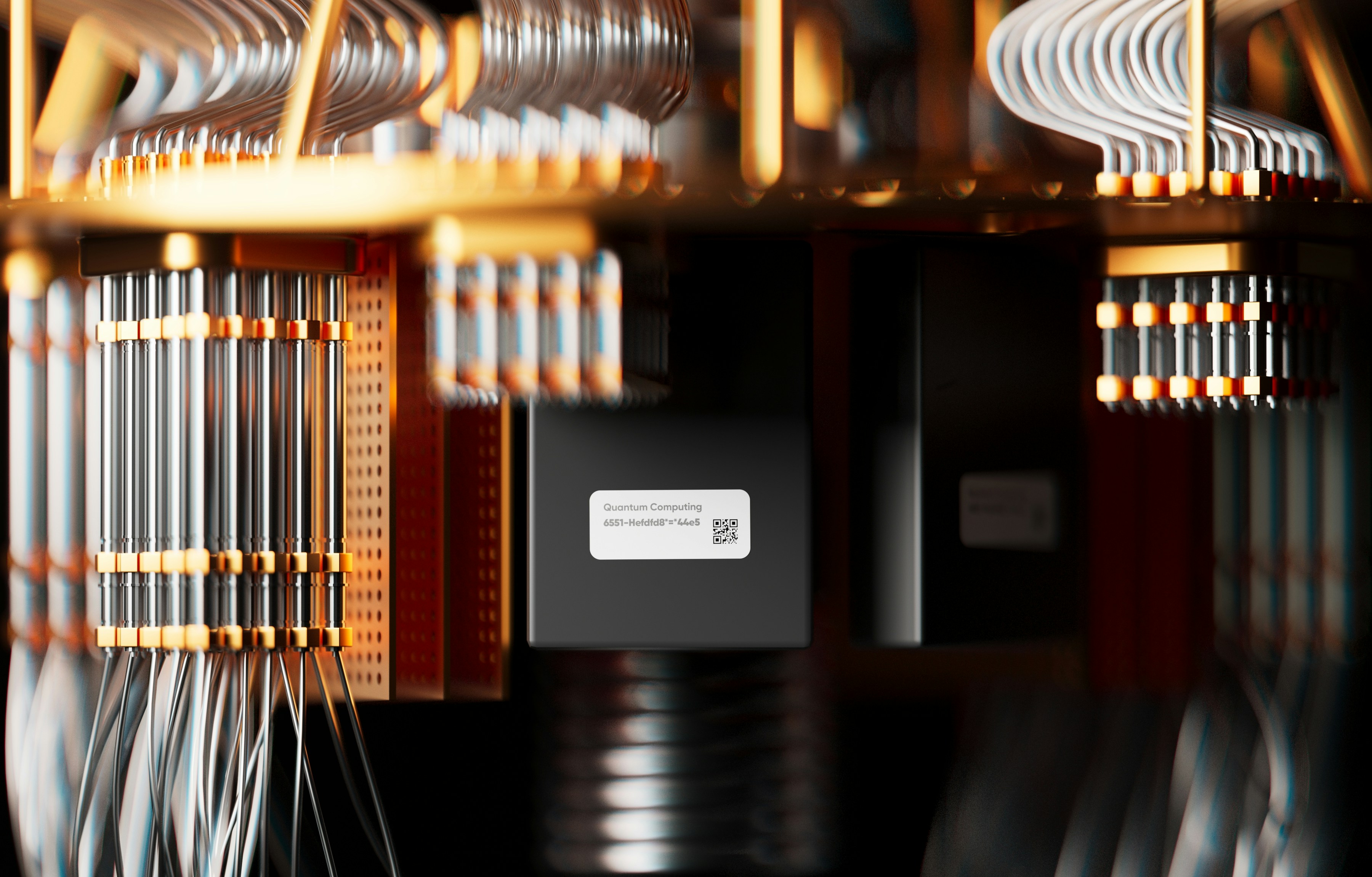
Microsoft announces major advancement in quantum computing stability, bringing practical quantum applications significantly closer to reality.
Microsoft's Azure Quantum team has achieved a major breakthrough in quantum error correction, solving one of the most significant challenges preventing practical quantum computing applications.
Quantum computers are notoriously fragile, with qubits losing their quantum state through a process called decoherence. Environmental factors like temperature fluctuations, electromagnetic interference, and cosmic rays can cause errors that corrupt calculations. Until now, error rates have been too high for reliable, large-scale quantum computing.
Microsoft's breakthrough involves a new approach to topological quantum computing combined with advanced error correction codes. The system can now detect and correct errors in real-time without destroying the quantum information being processed.
The Azure Quantum team has demonstrated:
Microsoft's approach uses topological qubits, which encode quantum information in the global properties of the system rather than in individual particles. This makes them inherently more stable and resistant to local disturbances.
The breakthrough involved successfully creating and manipulating Majorana zero modes, exotic quantum particles that exist at the boundaries of topological superconductors. These particles form the basis of topological qubits and have been theorized for decades but only recently demonstrated in practice.
This advancement brings several quantum computing applications closer to reality:
Microsoft is making this technology available through Azure Quantum, its cloud-based quantum computing service. Developers and researchers can access the error-corrected quantum computers through a familiar Azure interface, using Q# programming language or Python with the Qiskit framework.
The platform includes:
Microsoft is partnering with leading universities and research institutions to accelerate quantum computing research. The company has committed $100 million to quantum research grants and is establishing quantum computing centers at MIT, Caltech, and the University of Copenhagen.
The error-corrected quantum computing system is currently in limited preview, with general availability expected in Q3 2026. Microsoft plans to scale the system to 1,000 logical qubits by 2027, sufficient for solving many practical problems that are intractable for classical computers.
This breakthrough positions Microsoft as a leader in the quantum computing race, alongside IBM, Google, and emerging startups. The achievement validates the topological qubit approach and could accelerate the timeline for practical quantum computing by 5-10 years.
